Donna Barba Higuera brings us a radiant YA/middle grade novel that blends folklore and visions of the American Southwest with a futuristic “arc ship” sci-fi tale in which one brave girl is the last human who remembers Earth. It’s a story that celebrates story, and a wonderful, empowering book for young people who see their imagination as their greatest gift. (Also, what a cover!)
I really enjoy Kay as a storyteller, and he’s my husband’s favorite author, so we like to bond over reading his books together. While my soulmate was happy to give this beast five enthusiastic teary-eyed stars, I had a harder time stepping over the flaws in the execution of the whole, while still deeply enjoying certain sections. One of the things that likely contributed to this (which I didn’t realize until about the middle of the book), was that this title is a “GGK Avengers” of sorts, where we see returning characters, battle references, and cultural traditions that are pulled from other Kay worlds in previous books that I haven’t read. So… I believe that this novel is meant to be a crowd-pleaser for loyal Kay fans while also being readable as a standalone. For me, it was too many characters, too many gratuitous concubines, and too chaotic of a perspective-shifting situation. That said, I absolutely loved Folco and would gladly read an entire book of his adventures. And of course, as in every Kay book, the high quality banter at court was 100% on point. I will also always be thankful for this book as it kept me company in the airport during a long, looooong delay. 🙂
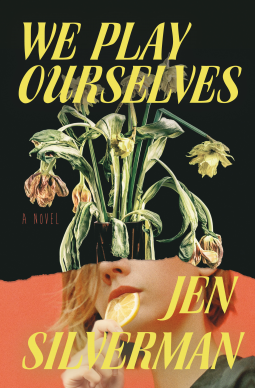
We Play Ourselves is a wry, spicy critique of the pursuit of artistic fame on two different American coasts. Watching the narrator’s past and present derailing creates a metafictional experience, as we also gain pleasure from knowing the private and public details of her life, all her failures and fantasies, complicit in a facsimile of voyeurism that is just… really, really smart. Darkly funny, but also resonant. Made me want to go to L.A. without a plan.
I’ve read Tennessee Williams’ breakout masterpiece many times, and even taught it to high school students for a couple years. But it’s been a while, and I wanted to see if it was still good. If possible, I think it’s even gotten better. The fragility of hope, the way regret will always find us, the illusions we believe… it’s all here. A pillar of American Theater.
Becky Chambers brings us a beautiful, gentle little book in A Psalm for the Wild-Built. The novel envisions a lovely future where human beings have figured it all out and sentient robots are living in their own natural utopia. The descriptions are gorgeous and the book provides a nurturing space for all of us who need to take a moment to remember who we are and why we’re here. It’s a fun solarpunk meditation walk, filled with humor, contemplation, and the earnest hijinks of a delightful robot named Mosscap. Also, this book will really, really make you want to have some good tea and to upgrade your bedroom linens and pillows.
Sidenote: As someone who has also read The Wild Robot, I strongly feel that Mosscap and Roz are related.
The Changeling is a stunning piece of modern horror. Victor LaValle pulls off a feat that somehow blends humor, terror, the incorporation of fairytales, social commentary, a New York City setting, and a narrative voice so genuine that you can’t help but trust it implicitly. There are so many allegorical levels at work here, it’s dizzying. It’s a story about parenthood, race, gender, belief, technology, evil, and dogged hope. A fascinating read.
Incredibly meticulous, Alfred Lansing’s Endurance is almost intimidating in its level of detail at first. But the deeper I sank into this story, the more appreciative I became of that detail. The way that Lansing painstakingly analyzed every crew member’s diary, interviewed surviving members, and researched everything he could possibly get his hands on regarding Shackleton’s voyage makes this book the immersive masterpiece that it is. You feel every moment. Reading it left me in awe at the capacity of human beings. It moved me to tears. What a book. What a story. What an absolute miracle.
How High We Go in the Dark is structurally fascinating. It reminded me of the way family stories get passed down, and we end up remembering names from someone else’s memory because the names were important… even if we don’t really grasp why or to whom. We learn about important moments from lives that never touched ours, but yet treasure those seeds of information and carry them with us, believing they’re a part of our story, too. (Does that make sense?) What I’m driving at is Nagamatsu’s intentional, recursive setting down and picking up of themes in different time periods, and different lives, all ones that are struggling through the great challenges of living on planet earth. This novel imagines the fractal-patterned fallout of grief on a global scale as it manifests in individual experiences. It’s surprising, timely, and affecting.
Star Eater comes out blazing from page one with great worldbuilding that is both transportative and familiar. The story reads as a metaphorical exploration of inherited power and harm. While exploring those themes, Hall brings us interesting imagery, political intrigue, and a quest-driven plot along the way.
I’ve been a huge admirer of the late Ursula K. Le Guin ever since I read The Left Hand of Darkness and my mind was never the same. How lucky we are that some of her best writing advice is preserved in this volume! It’s a largely no-nonsense guide that distills writing into its most basic elements–she presents a deep dive on things like description, verb tenses, and point of view with plenty of examples and exercises to go with each section. But my favorite part was where she waxed a bit philosophical about how and why these nuts and bolts fit into the larger magic of story. There’s also a heaping helping of patented Le Guin sassiness and I loved that.